Product, engineering, and delivery · 2024 to 2025
Finding the right nanny is a matching problem, not a search problem
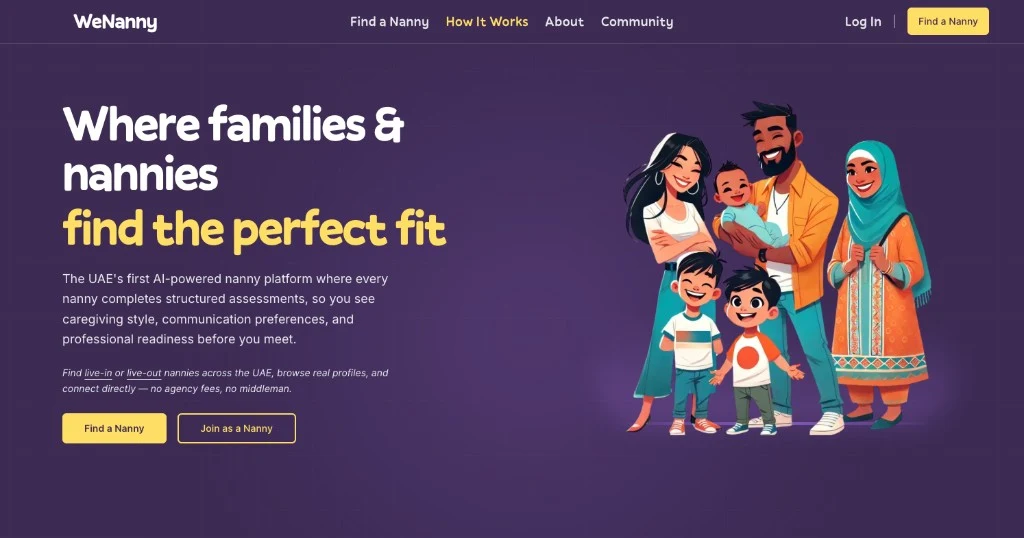
WeNanny uses structured data and AI to match families with nannies based on real compatibility, not just availability.
Guided matching: explainable fit, not endless scrolling
Better matching
Beyond filters and availability
Structured profiles
Clearer comparison across candidates
Explainable recommendations
AI shows why a match makes sense
The problem I was solving
Fragmented channels, shallow profiles, and hiring decisions made on instinct.
Fragmented channels
Families juggle WhatsApp groups, agencies, and referrals with inconsistent information and no single source of truth.
Poor comparison
Profiles lack depth and structure, so it is hard to evaluate fit before investing time in conversations.
Low confidence
Decisions default to instinct and luck instead of transparent signals families can trust.
Before and after
Same user intent. Different product experience.
- WhatsApp groups and scattered referrals
- Hard to compare candidates
- Profiles lack depth
- Decision made on instinct alone
- Structured family and nanny profiles
- Better candidate comparison
- More intentional matches
- Clear rationale behind recommendations
How it works
How I designed the matching journey
- 1
Capture family needs
Families define what matters most, from childcare needs to timing and preferences.
- 2
Standardize nanny profiles
Experience, skills, certifications, and preferences are structured into a consistent format.
- 3
Apply hard filters
The system removes clearly unsuitable matches first.
- 4
Rank by compatibility
AI helps surface candidates based on fit, not just availability.
- 5
Explain the match
Families see why a nanny may be a strong fit for their situation.
What I shipped
Every feature moves a family from browsing to a decision they can explain.
Feature 01
Structured nanny profiles
Profiles designed for comparison, not just listing.
- Assessments and preferences surfaced consistently
- Clearer signals for caregiving style and readiness
- Less noise in the shortlist
Feature 02
Compatibility-led matching
Shortlists based on real suitability signals.
- Hard filters plus similarity-style ranking
- Contextual ordering for each family
- Fewer irrelevant introductions
Feature 03
Explainable recommendations
Why this nanny may be a fit for this family.
- Rationale alongside each strong match
- Transparency builds trust faster than volume
- Faster, more confident next steps
Feature 04
Search-demand content engine
Insight drafts from Search Console queries and the existing article corpus, on Supabase Edge Functions.
- Demand comes from GSC, not a blank editorial calendar
- New drafts reuse what already ranks and what already exists
- Runs in production on WeNanny, not as a slide-deck demo
Outcomes
Less manual filtering
Better shortlist quality
More confident decisions
Insight drafts from search demand
Key insights
What we learned building in production.
The bottleneck was confidence in the match, not access to candidates.
Structured comparison beat adding more listings every time I tested it.
Search Console plus the existing corpus is a better brief than a blank page.
What makes this different
Families were choosing between volume and trust. They needed both.
Directories
Lots of options, little clarity
Agencies
High-touch, limited transparency
WeNanny
Structured matching with explainable fit
Want a marketplace like this built?
WeNanny's matching loop is the kind of product I take through ROQ CX's four-week Build & Launch sprint: structured profiles, ranking, explainability, and a production codebase you can grow.
See the Build & Launch sprint- Fixed fee
- Four weeks
- Production codebase
Want to try the product itself? Explore WeNanny